Biruk Abera Cherkose (Ph.D.)
Postdoctoral Fellow: Center for Geophysics, Energy and Minerals (CGEM): @Colorado School of Mines

Research Areas and Interests
Geologic Hydrogen Exploration: Mapping serpentinization, source rocks, migration pathways, and subsurface architecture.
Magnetotelluric Imaging: 3D MT FWD modeling and inversion, electrical anisotropy, and deep crustal structure.
Integrated Geophysics for Mineral Exploration: Combining MT, gravity, magnetic, petrophysics, and geology for exploration problems.
Code development: For geophysical analysis, FWD and Inversion
Interests: Energy Transition, Critical Minerals Exploration and AI
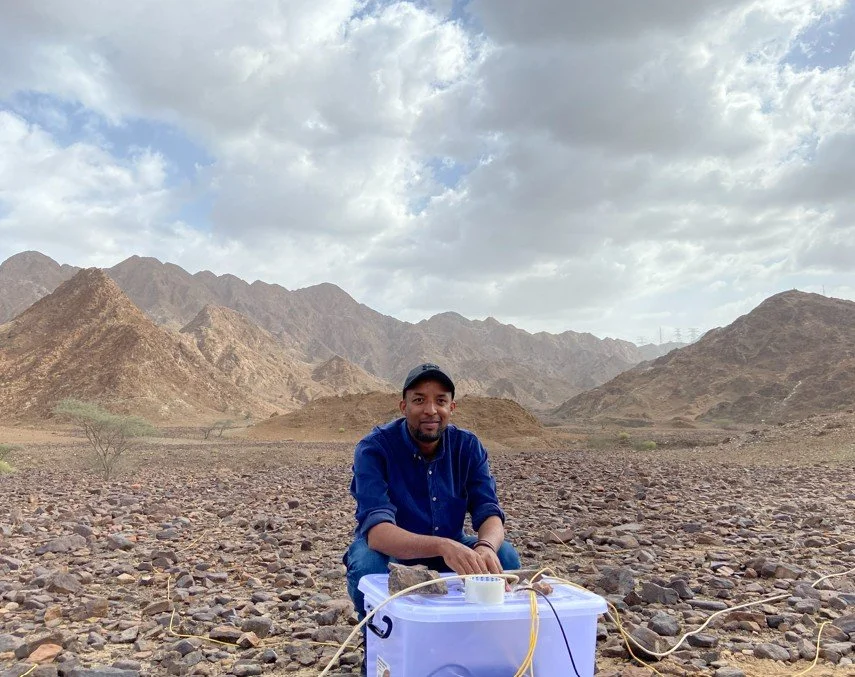
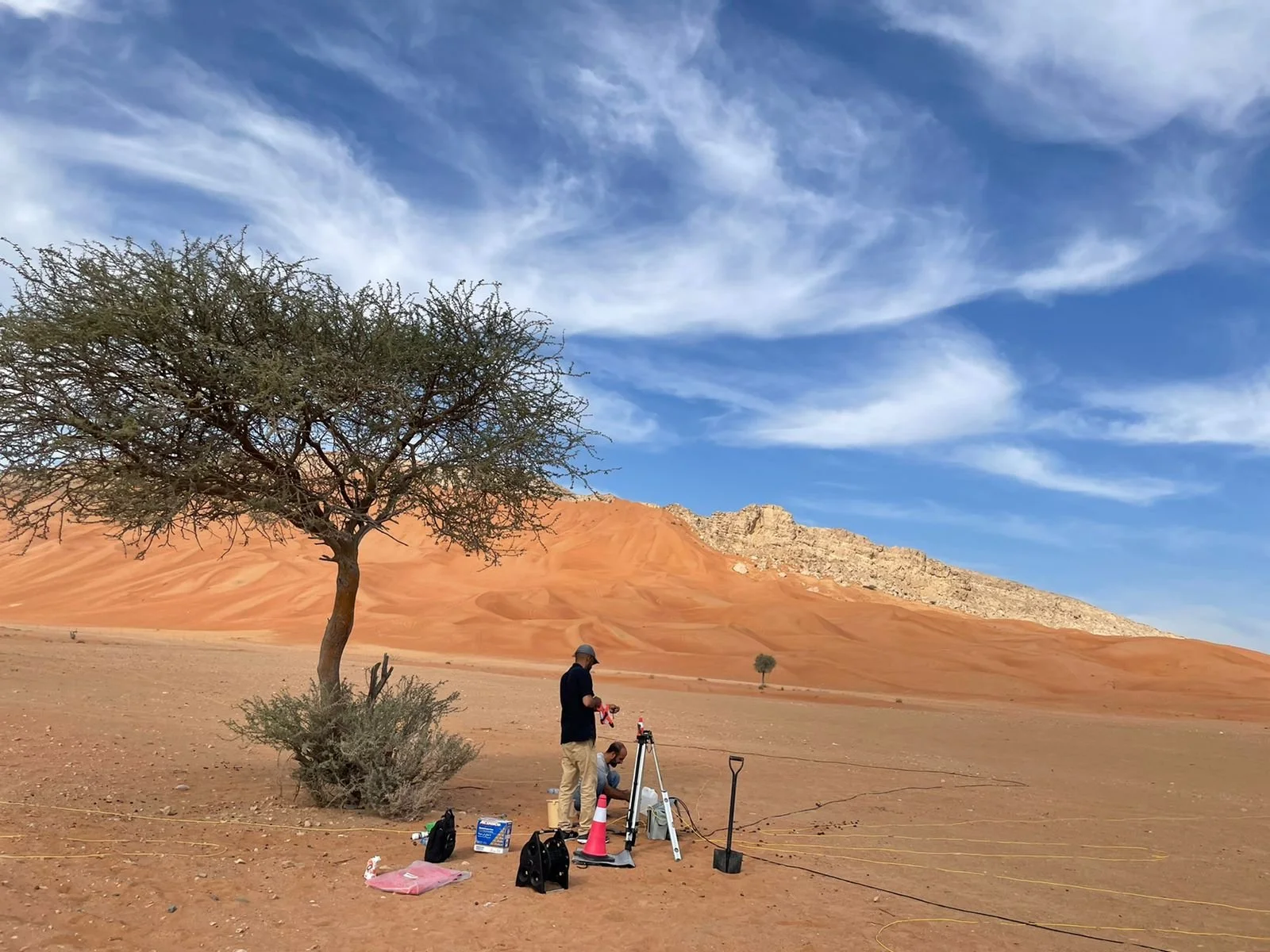
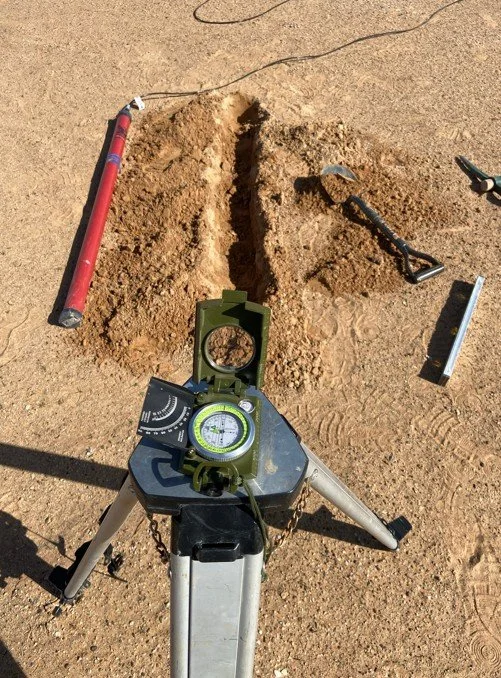
Figure 1: Magnetotelluric survey in the UAE ophiolite blocks (Dec 2021 – Mar 2022). Ophiolites are prime targets for geologic H2. In the UAE these Fe-rich rocks are exposed in the Hajar mountains and buried under a foreland sediments.
In my research, I study how serpentinization-related features such as fractures, veins, mineral fabrics, and fluid pathways can produce electrical anisotropy. By analyzing MT phase tensors, impedance responses, and related electromagnetic signatures, I aim to identify directional electrical patterns that may indicate organized reaction and migration pathways within geologic hydrogen systems.
The broader goal of my work is to move beyond simply detecting bulk physical property changes and toward mapping the architecture of subsurface reaction systems. This approach may help identify favorable areas for natural hydrogen generation, migration, and may also provide insight for future stimulated hydrogen systems where fluid flow pathways and rock–water interaction are critical.
About my current research
My current work involves working primarily on geologic hydrogen exploration using the magnetotelluric (MT) and potential field methods. My research focuses on understanding geologic hydrogen systems, with particular emphasis on mapping the distribution of serpentinization in potential source rocks.
Geologic hydrogen can be produced when water reacts with Fe-rich mafic and ultramafic rocks through a geochemical process known as serpentinization. This reaction can generate hydrogen while also changing the physical properties of the rocks, including their electrical conductivity, magnetic properties, density, and permeability.

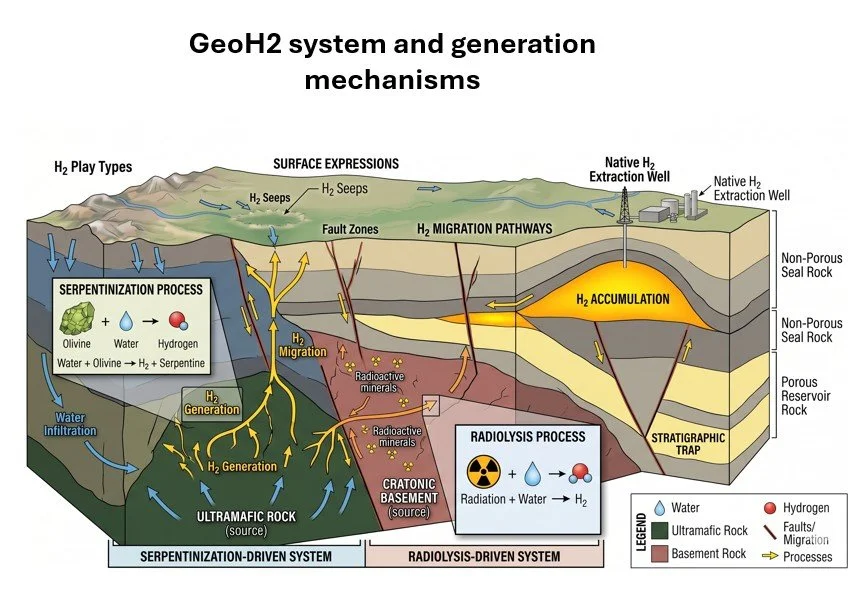
Figure 2: How natural hydrogen is created: An overview of the geologic hydrogen system and its main drivers- serpentinization, radiolysis, and mantle degassing.
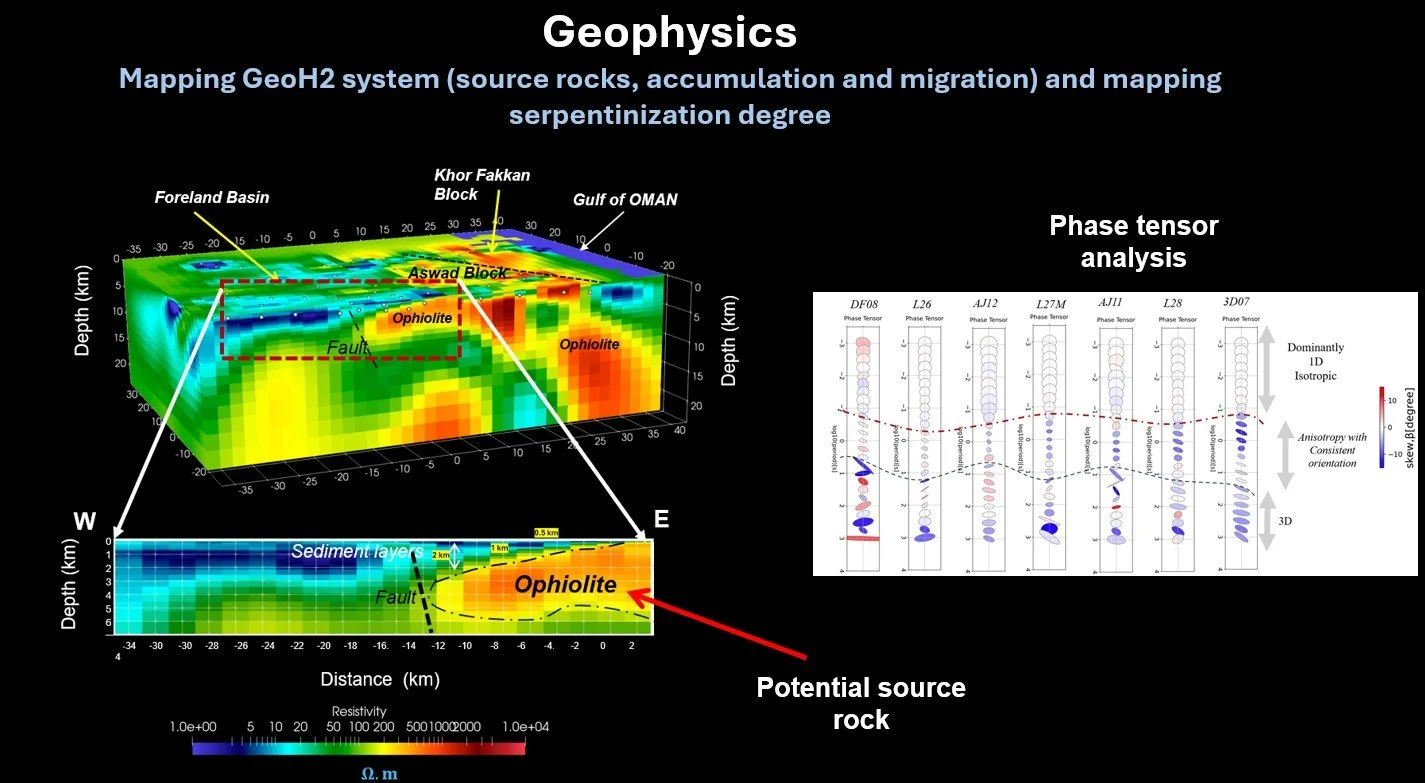
Figure 3: Integrated MT inversion and phase tensor analysis. The 3D resistivity model (left) delineates the deep subsurface architecture of the UAE ophiolite blocks and sediment layers, while the phase tensor analysis (right) identifies distinct zones of electrical anisotropy related to potentially serpentinized zones.
Recent publications related to the Geologic Hydrogen projects at the CGEM
Cherkose, B. A., Zhang, M., Li, Y. (2026). Detecting Serpentinization Related Electrical Anisotropy Using Magnetotelluric Phase Tensors: Application in Geologic Hydrogen Exploration, Journal of Geophysics and Engineering, https://doi.org/10.1093/jge/gxag023
Cherkose, B.A., Zhang, M. & Li, Y. (2026). Finding geologic hydrogen generation in UAE ophiolites: insights from MT phase tensor mapping of serpentinization. Discov Appl Sci, https://doi.org/10.1007/s42452-026-08490-8
Cherkose, B. A, Zhang, M., Li., Y. (2025). A Geologic hydrogen investigation using magnetotelluric phase tensors: Case study from the UAE Ophiolite blocks, IMAGE Conference 25-28 August 2025, George R. Brown Convention Center Houston, Texas, USA. https://doi.org/10.1190/image2025-4316802.1
Zhang, M., Cherkose, B. A., Li., Y. (2025). Predicting potential geologic hydrogen reservoir locations using MT and seismic data, IMAGE Conference 25-28 August 2025, George R. Brown Convention Center Houston, Texas, USA. https://doi.org/10.1190/image2025-4316496.1
Invited Talks
Denver Geophysical Society, May 14 DGS Luncheon